
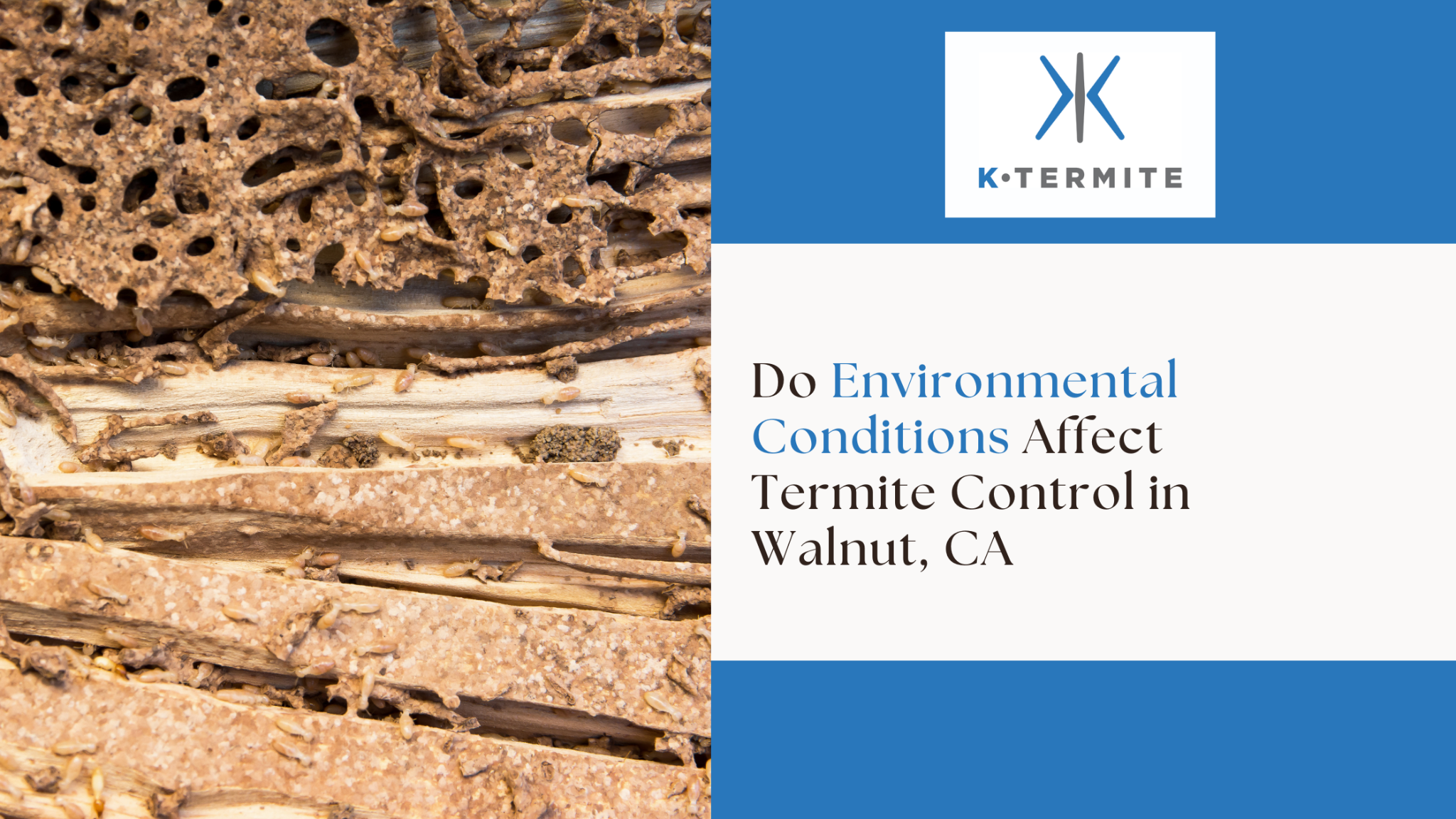
Termite management isn’t just about applying treatments; it’s about understanding the environmental factors that influence the effectiveness of termite control strategies.
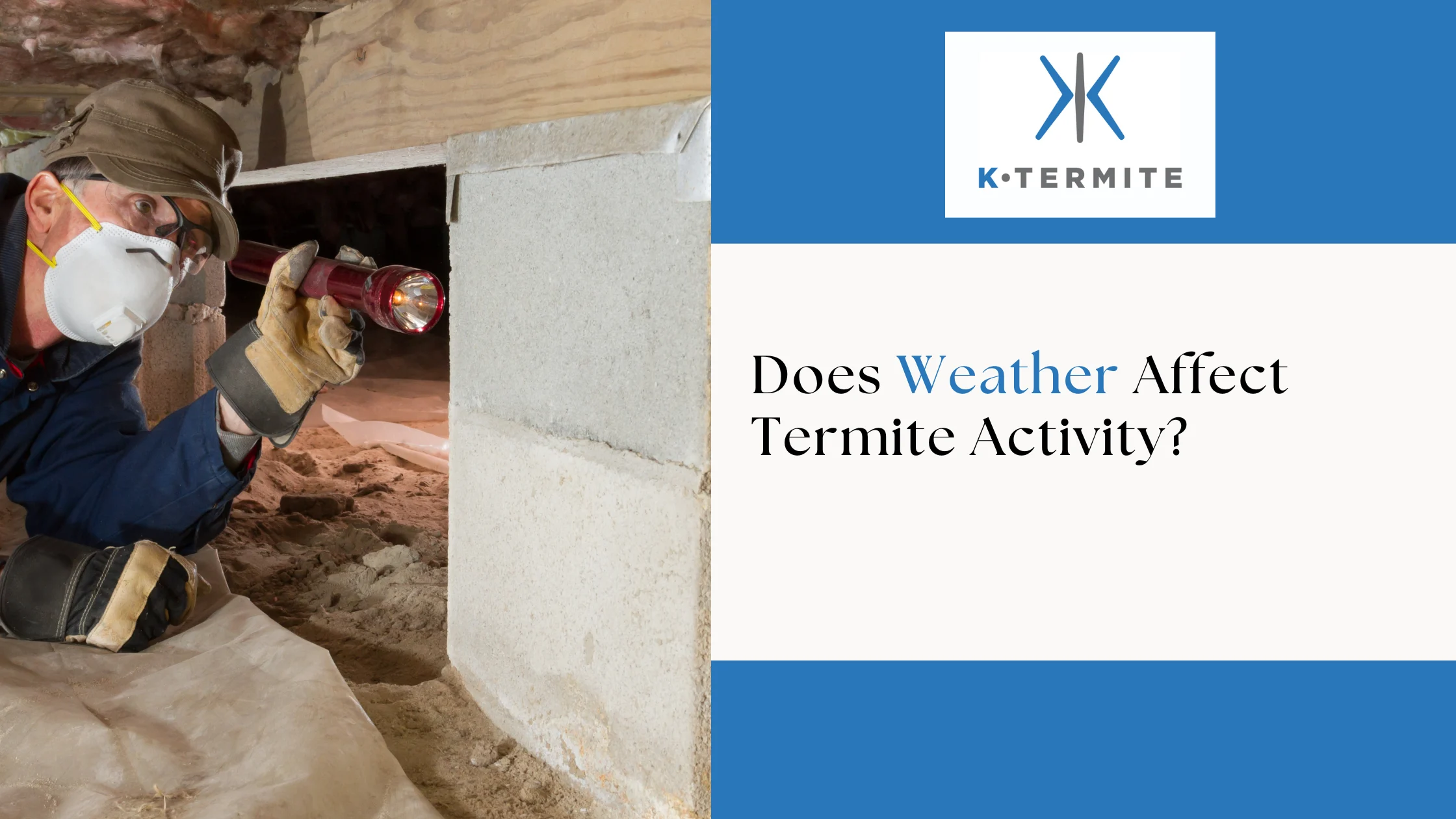
Yes, environmental conditions do affect termite control in Walnut, CA. Factors such as climate, soil type, moisture levels, and landscaping all play a significant role in how well treatments perform.
How the Environment Shapes Termite Behavior
Environmental conditions strongly influence termite survival, activity, and colony growth. In Walnut, CA, several factors dictate where and when termites are active:
- Colony Location – Termites select nesting and foraging sites based on soil type, moisture, and the availability of shelter. Moist, shaded areas near foundations are particularly attractive.
- Movement Patterns – Landscape features and environmental obstacles guide termites’ tunneling routes. Dense vegetation or mulch near walls can inadvertently direct colonies toward homes.
- Activity Timing – Seasonal temperatures influence termite behavior. Warm periods accelerate movement and reproduction, while cooler periods drive termites deeper into soil or wood, making infestations harder to detect.
- Colony Expansion – Consistent moisture and mild climates, like Walnut’s, allow colonies to grow year-round. This increases the risk to structures, emphasizing the need for continuous monitoring and treatment.
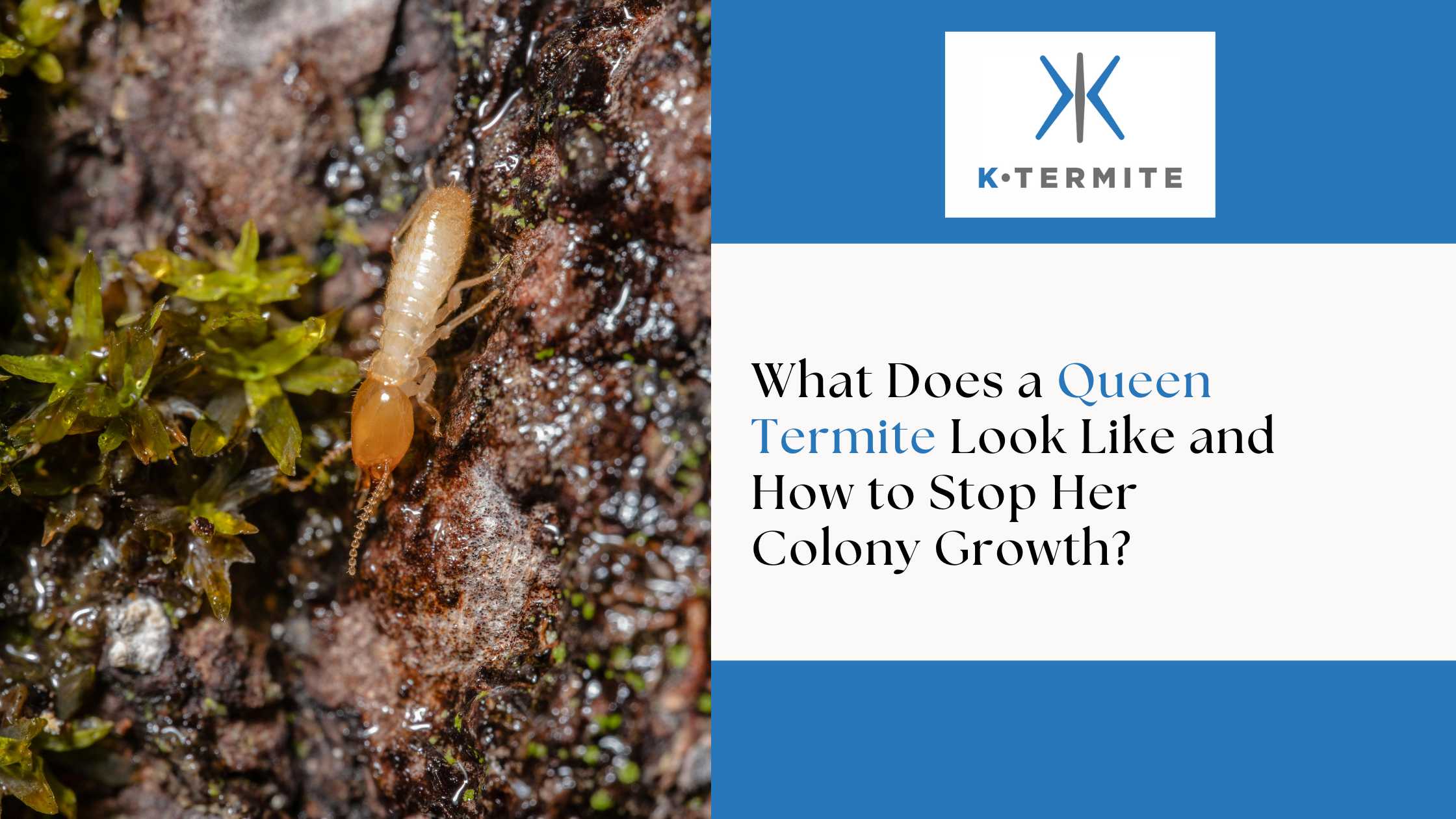
Learn: What Does a Queen Termite Look Like and How to Stop Her Colony Growth?
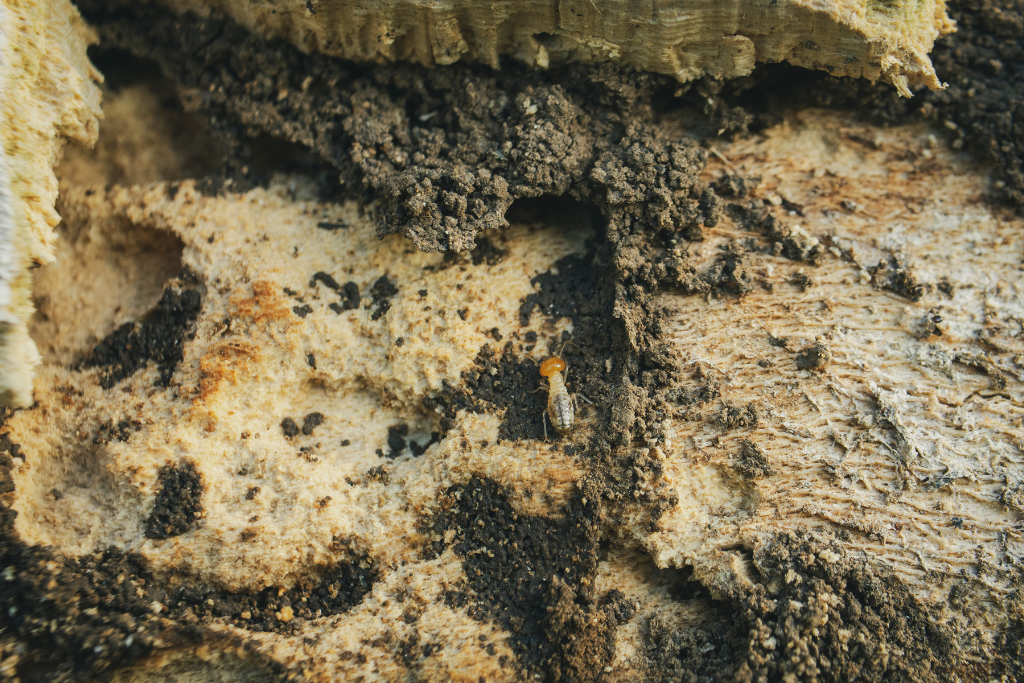
Environmental and Property Factors Influencing Termite Activity and Control
Moisture, temperature, and property layout affect termite activity and infestation risk. Understanding these factors helps homeowners in Walnut, CA, protect their homes and improve treatment effectiveness.
Moisture Levels
Water is critical for termite survival. Excess moisture near a home can undermine treatments and encourage colony growth. Common sources of excess moisture include:
- Leaky roofs or plumbing
- Overwatered lawns or irrigation systems
- Poor drainage is creating standing water
- Crawl spaces with limited ventilation
Managing these sources not only reduces termite activity but also improves the performance of soil-applied chemical barriers.
Temperature and Climate Effects
Temperature influences termite activity and the speed of colony development. In Walnut, CA, mild winters and warm summers allow termites to remain active year-round. Treatments must address both visible infestations and hidden colonies beneath soil or within wood.
Soil Composition and Structural Considerations
Different soil types can impact how well professional termite treatments, like chemical barriers and physical protections, work.
- Sandy Soil: Allows easy tunneling but may drain quickly, impacting barrier stability.
- Clay-Rich Soil: Retains moisture, which termites favor, but may also impact chemical dispersion.
Structural features also interact with environmental conditions:
- Wooden posts in direct contact with soil
- Crawl spaces with poor ventilation
- Foundation cracks that allow moisture intrusion
Recognizing these risk factors is critical when planning termite protection strategies.
Get to know: When Should Homeowners Consider Soil Termite Treatment?
Landscaping’s Role in Termite Risk
Landscaping is often overlooked but has a significant impact on termite management. Dense shrubs or plants near foundations trap moisture, while mulch and wood chips retain water and act as potential food sources. Wooden fences, decks, or garden beds in direct contact with soil can serve as pathways for termites.
Strategic landscaping spacing plants away from walls, minimizing mulch near wooden surfaces, and elevating garden structures reduces moisture accumulation and complements professional treatments, helping prevent infestations.
Symbiotic Relationships and Environmental Impact
Termites rely on gut microorganisms to digest cellulose. Environmental factors such as humidity, temperature, and soil quality influence these symbiotic relationships.
- Warm, humid conditions enhance microorganism activity, which supports faster feeding and colony growth.
- Dry or poorly ventilated environments slow digestion and colony expansion.
By modifying environmental conditions, homeowners can indirectly disrupt termite feeding efficiency, complementing professional control methods.
Professional Termite Control Techniques Adapted to the Environment
Professional termite management in Walnut goes beyond basic chemical treatments. Control strategies are selected based on property features, soil type, and moisture levels. Modern approaches include:
- Graded Particle Barriers: Specially sized soil layers around foundations prevent subterranean movement.
- Stainless Steel Mesh Barriers: Installed during construction or renovation to prevent entry through cracks or joints.
- Insect Growth Regulators (IGRs): Chemicals that interfere with termite development, slowing colony growth.
- Chitin Synthesis Inhibitors: Disrupt exoskeleton formation, weakening termites over time.
These methods, combined with proper environmental management, provide the most effective and long-lasting protection.
Related Articles:
Termite Prevention vs. Repair Costs: Which Saves You More Money?
Which Wood Types Are Most Resistant to Termite Damage?
How Do I Choose the Right Termite Treatment for My House?
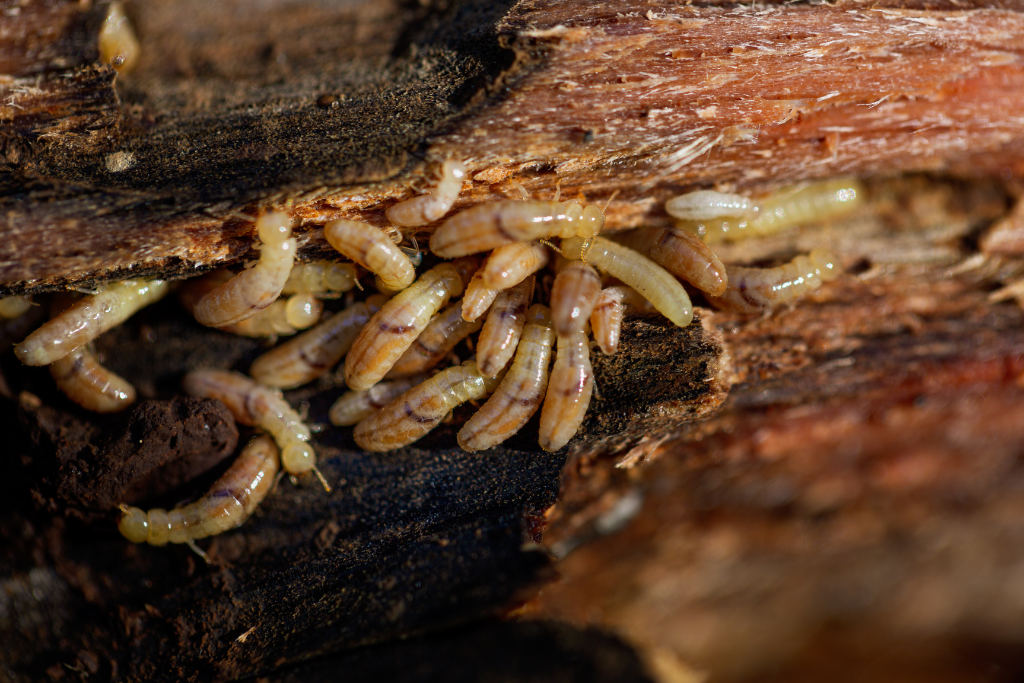
Importance of Local Expertise
Walnut’s mild winters, warm summers, and seasonal rainfall create conditions where termite activity can persist year-round. Local professionals understand these factors and can identify high-risk areas, recommend suitable treatments, and monitor seasonal changes to maintain protection.
Partnering with knowledgeable specialists ensures termite management is proactive, adapting to changing conditions rather than reacting only after damage occurs.
Check out: 5 Reasons Local Termite Companies Beat Big Brands
What Services Does K Termite Offer to Prevent Termite Damage?
Protecting homes in Walnut requires understanding both termite behavior and the environmental conditions that make properties vulnerable. At K Termite, we combine this knowledge with professional services designed to prevent, detect, and treat infestations effectively.
Our comprehensive approach includes:
- Free Inspections: Assessing moisture, soil, and wood-soil contact points.
- Customized Treatment Plans: Combining chemical, physical, and biological methods suited to the property’s conditions.
- In-House Carpentry: Repairing damaged wood to prevent reinfestation.
- Strong Warranties: Ensuring long-term protection and peace of mind.
By addressing environmental conditions and partnering with professionals, homeowners can minimize termite risk, maintain treatment effectiveness, and protect the structural integrity of their homes.
Get in touch with K Termite in Walnut, CA, to protect your home from termites.

.png)
.png)
.png)
.png)
.png)
.png)
.png)
.png)
.png)
.png)
.png)
.png)
.png)
.png)
.png)
.png)
.png)
.png)
.png)
.png)
.png)
.png)
.png)
.png)
.png)
.png)
.png)
.png)
.png)
.png)
.png)
.png)
.png)








.png)
.png)
.png)
.png)
.png)
.png)
.png)
.png)


.png)
.png)







.png)
.png)

.png)
.jpg)

.webp)
.webp)



.webp)

.svg)

