
.png)
Most homeowners in Diamond Bar don’t think about termites until a termite inspection report (WDO) reveals a problem. By then, damage may already be advanced.
But termite activity doesn’t always require tenting your entire house, prepping, packing, and moving out for days. In many cases, infestations are isolated to one beam, one wall void, one attic section, or one exterior area. When caught early, localized termite treatment can eliminate the issue efficiently without major disruption.
The challenge is knowing when the problem is suitable for localized drywood and subterranean termite treatment.
This article breaks down the specific signs that indicate you may need localized termite treatment in Diamond Bar, how to recognize early-stage infestations, and why quick action protects your home and biggest investment.

When Do You Need Localized Termite Treatment in Diamond Bar, CA?
Localized termite treatment is typically recommended when termite activity is confined to a specific area rather than widespread throughout the structure. Whether your property is an older ranch-style home near Diamond Bar High School, recognizing early indicators can prevent the need for full-structure fumigation.
1. Termite Activity Is Confined to One Specific Area
One of the strongest indicators for localized treatment is activity in a clearly defined location.
For example:
- Frass only beneath one window
- Damage is limited to a single garage stud
- Bubbling paint on one trim section
If no additional signs appear in nearby rooms, attic framing, or other structural wood, this often suggests a contained colony.
When infestation remains isolated, targeted treatment can effectively eliminate the problem.
2. You Notice a Small, Fresh Pile of Frass in One Spot
Drywood termites push droppings (frass) out of small kick-out holes.
If you’re seeing:
- A small pile directly below one wood member
- Fresh pellets that reappear only in the same spot
- No droppings in other rooms
This may indicate a single, localized colony.
When frass is scattered throughout multiple areas of the home, that suggests broader activity. But when it’s consistently limited to one location, localized treatment is often appropriate.
3. Hollow-Sounding Wood in One Structural Member
Drywood termites consume wood from the inside, leaving the outer shell intact; if only one section sounds hollow when tapped, the colony may be confined to that specific piece of wood. When the structural integrity of your home—especially in moisture-prone areas near Summitridge Park—remains solid, localized treatments can effectively eliminate the problem before it spreads into adjacent framing. When surrounding wood members remain solid and undamaged, the colony may be confined within that area. Early detection at this stage allows for precise direct treatment of the affected galleries before termites migrate and multiply into multiple surrounding areas.
Get to know: Do Drywood Termites Thrive Undetected in Wood?
4. Minor Surface Damage Without Structural Weakening
Spot treatment for termites is most successful when the infestation is still in its early stages. At this point, damage may appear as slight blistering in paint, minor cracking in trim, or small exit holes.
If structural integrity remains intact and there is no sagging, warping, or weakening of load-bearing components, the infestation may not have had time to expand. Addressing the issue during this early phase can prevent larger structural involvement and limit repair costs.
5. Swarmers On The Exterior
Swarmers are reproductive termites that leave a mature colony to start new ones. If you notice swarmers on the exterior. This may indicate that a colony is nearby, but not necessarily within the home. .
When swarmers don’t appear in clusters, it’s not always a bad sign.o
Learn: What Are Termite Swarmers and How Do They Affect Your Property?
6. First-Time Discovery of Termite Evidence
If this is the first time you’ve observed termite signs and your home has no prior history of recurring activity, there is a greater chance the infestation is recent. Early-stage colonies are typically smaller and better suited for localized treatments.
When termites are discovered soon after activity begins, a professional termite company can apply treatments to eliminate a colony before additional colonies develop within the structures.
7. The Infested Wood Is Easily Accessible
Localized treatment works best when technicians can directly access the affected area.
Examples include:
- Exposed garage beams
- Fascia boards
- Window trim
- Patio covers
- Door frames
If the wood member can be directly drilled and treated without obstruction, targeted direct treatments are highly effective. Accessibility is a key factor in determining if your home is a candidate for this method versus full tenting.
8. Damage Is Limited to Decorative or Non-Structural Trim
In many properties of Diamond Bar, drywood termites begin in:
- Decorative exterior trim
- Eaves
- Fascia boards
- Garage door framing
When damage is limited to these non-structural components, localized treatments combined with termite repairs can fully resolve the issue.
Taking early action prevents the spread of dry rot or termites into deeper structural framing, saving you from expensive structural repairs.

Important Note: Consider a Professional Termite Inspection
If you are unsure whether the signs indicate severe termite activity, scheduling a professional inspection is the safest step. Issues like bubbling paint or fungus can sometimes be mistaken for moisture problems or normal aging, but a pro can tell the difference. A detailed termite inspection helps confirm whether termites are present, identify the species, and determine if the infestation is localized or more extensive.
In Diamond Bar, an early and accurate evaluation prevents small issues from turning into five-figure structural concerns. A professional report from a licensed termite company provides clear answers and a practical plan for the right treatments.
Related Articles:
Top Questions to Ask Your Termite Inspector
What Makes K Termite Different From Other Companies
Why a Full-Structure Termite Warranty and Annual Inspections Are Worth It
When Localized Treatment May Not Be Enough
While spot termite treatment is effective in many cases, it may not be suitable if:
- Multiple colonies are found in different areas
- Infestation is clearly widespread in structural areas
- Damage repairs are extensive
- Swarms have been observed in clusters inside the home
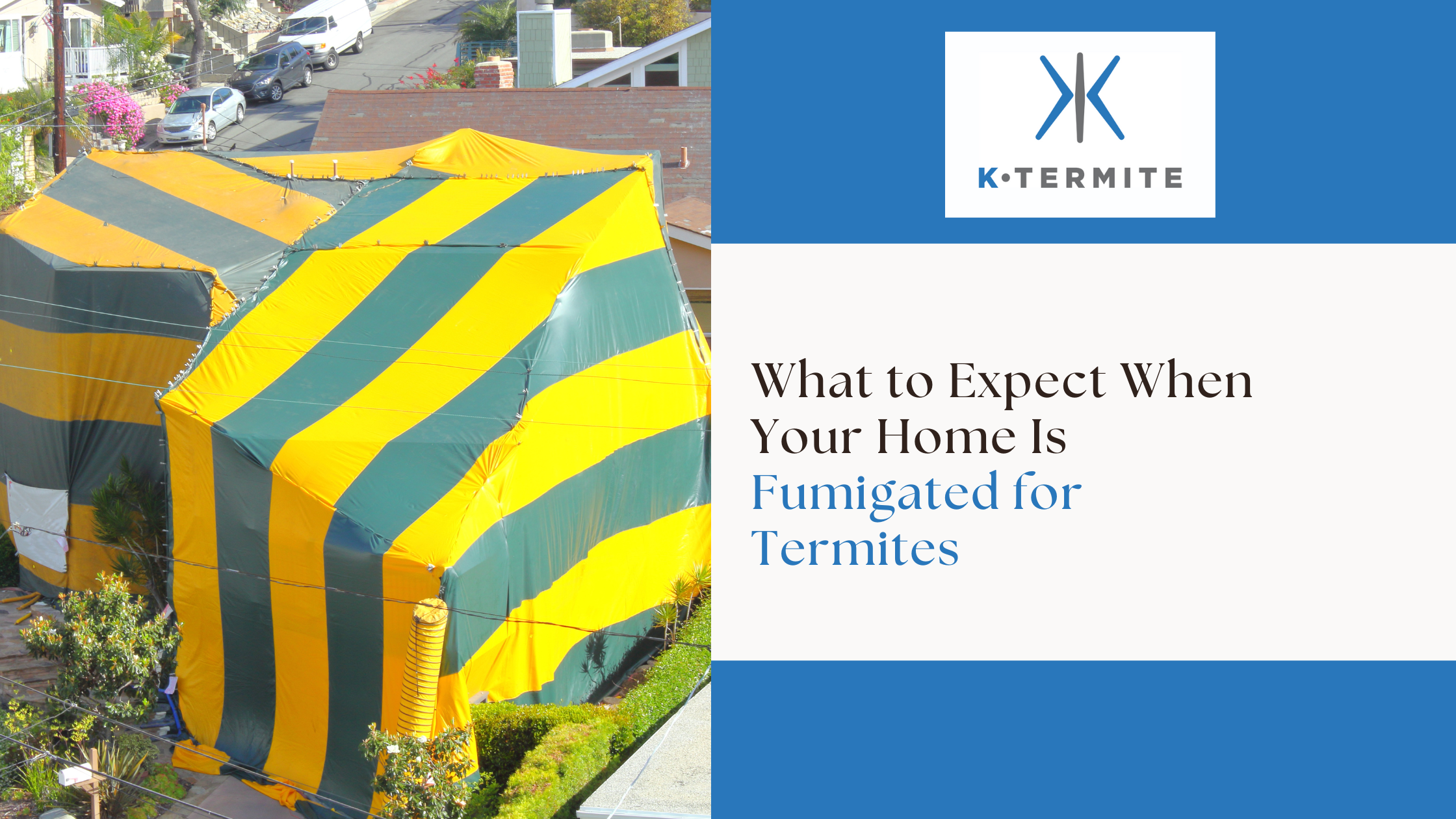
A licensed termite specialist in Diamond Bar can determine whether spot treatment or a broader solution like tent fumigation is required.
Do You Need Localized Termite Treatment in Diamond Bar, CA?
When termite activity is limited to a specific area, we focus on precise, localized treatment solutions that protect your home without major disruption. At K Termite, we provide FREE detailed inspections to determine the full extent of activity and create customized localized treatment plans tailored specifically to your property.
We offer multiple treatment options and ensure every recommendation fits the condition of your home.. If damage is present, our professional in-house carpentry team can restore affected components to restore both the structural integrity and the visual appearance of your home.
We also stand behind our work with industry-leading warranties and offer ongoing annual inspection programs for continued protection. We carefully evaluate whether localized treatment is appropriate or if broader protection is needed, always prioritizing long-term results over temporary fixes.
Call K Termite today to schedule your FREE inspection and find out if localized treatments are the right solution for your Diamond Bar property. Early action prevents larger structural damage, repairs, and higher costs.

.png)
.png)
.png)
.png)
.png)
.png)
.png)
.png)
.png)
.png)
.png)
.png)
.png)
.png)
.png)
.png)
.png)
.png)
.png)
.png)
.png)
.png)
.png)
.png)
.png)
.png)
.png)
.png)
.png)
.png)
.png)
.png)








.png)
.png)
.png)
.png)
.png)
.png)
.png)
.png)


.png)
.png)







.png)
.png)

.png)
.jpg)

.webp)
.webp)



.webp)

.svg)

