
.png)
Wooden floors are what give a home warmth and character and make a space feel cozy and inviting. That’s why many homes in Yorba Linda feature wooden flooring. They fit beautifully with a home’s style and add lasting value.
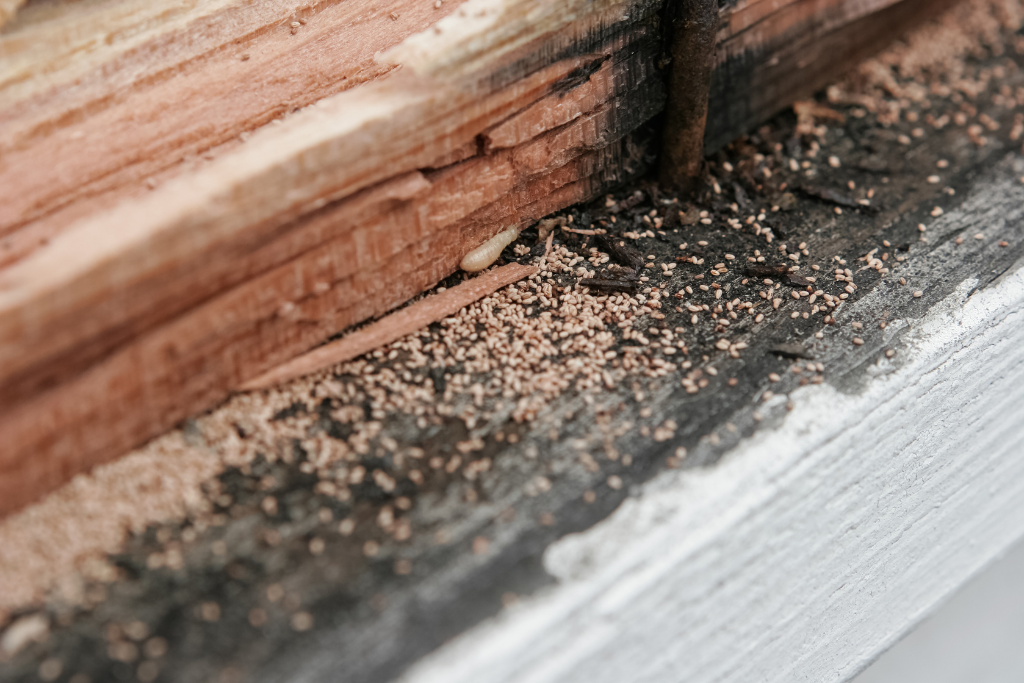
Unfortunately, termites are often underneath, silently & steadily eating away. By the time something finally catches your attention, it’s going on longer than you’d think.
What Makes Homes in Yorba Linda More at Risk?
Yorba Linda offers a comfortable living environment, but those same conditions can quietly support termite activity. It’s not about extreme weather; it’s actually the lack of it that matters.
1. Mild Seasonal Changes: In colder regions, freezing temperatures slow down many activities. Yorba Linda doesn’t get that seasonal break. Stable weather throughout the year means there’s no pause for termites.
Learn: Does Weather Affect Termite Activity?
2. Low but Consistent Humidity: The area isn’t overly humid, but there’s enough moisture in hidden spaces. Over time, slowly weakens and attracts termites.
3. Wood Construction: Many homes, especially older ones, use wood extensively in their structure. From framing to subfloors, there are multiple layers where wood is present. This increases the chances of termite damage compared to homes built with more non-wood materials.
4. Landscaping and Exterior Wood Features: Decks, fences, and planters placed close to the house act as entry points. If something begins there, it doesn’t end there. Within one breeding cycle, a colony can migrate to your home.
Get to know: Why Termites Target Sheds, Decks, and Fences Before Your House
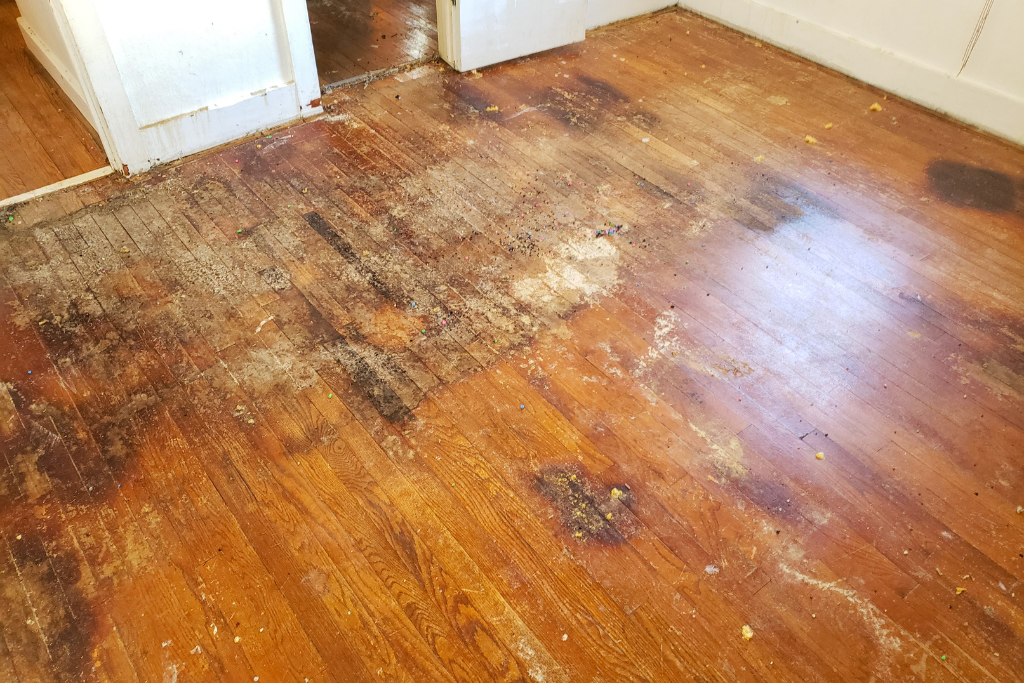
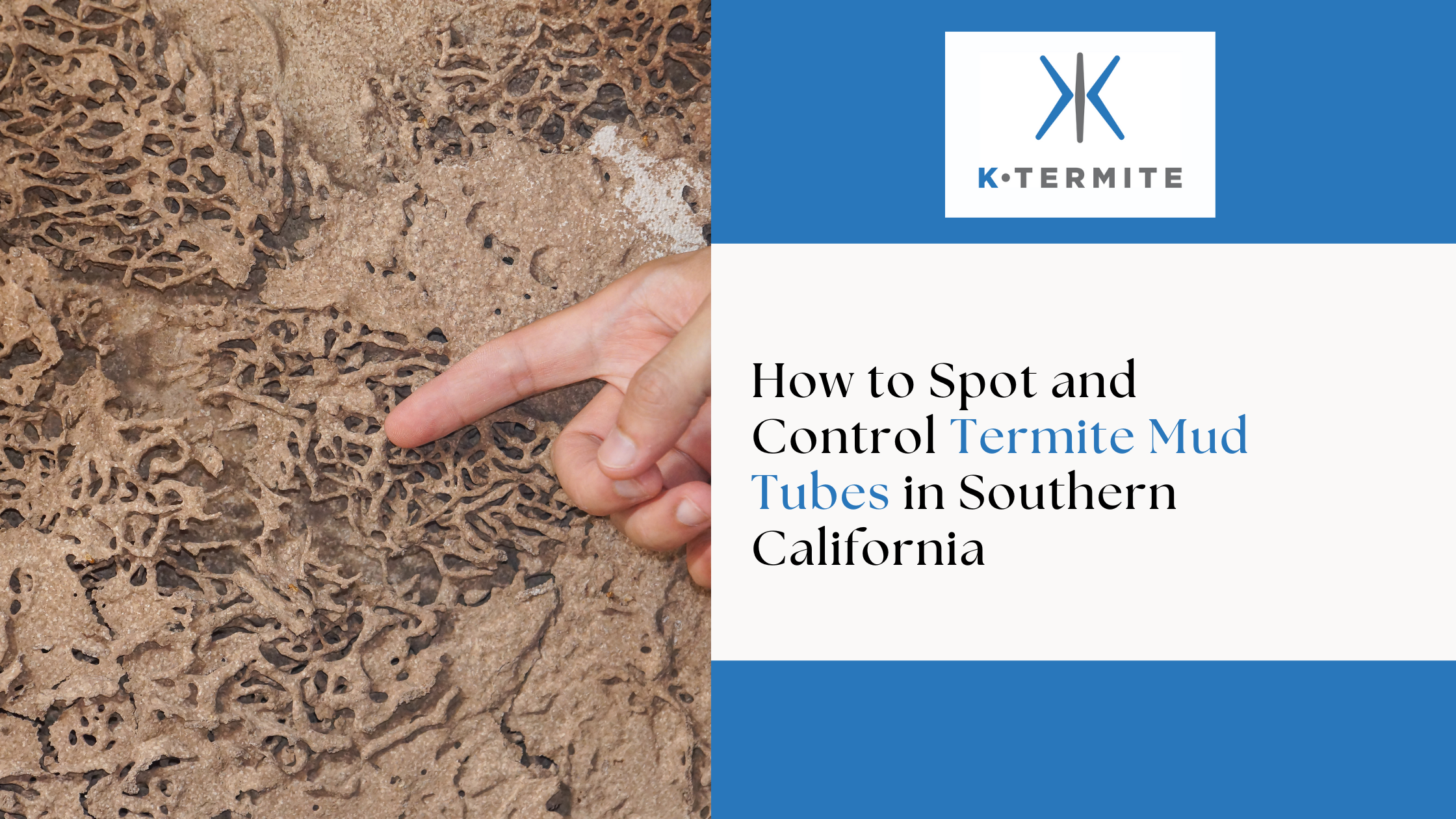
What Does Termite Damage Look Like on Wooden Floors
Flooring doesn’t always show obvious warning signs. But many small changes can hint at a deeper issue. Paying attention to these common signs can prevent problems before they become serious.
Hollow Sounds: If parts of your floor sound hollow, it could mean the inside structure is weak. The surface may look fine, but damage exists underneath.
Warping or Buckling: Boards that begin to lift, bend, or lose their even shape can signal that something below is affecting their support.
Small Holes or Fine Dust: Small holes or fine powder near floor edges indicate internal activity. Easy to miss, but signals interior damage.
Tight-Fitting Doors or Uneven Leveling: When floors shift and sag, it can affect how doors open and close. If a door starts sticking or doesn’t align properly, this is another common sign.
How Termite Damage in Wood Floors Spreads
Termites can stay inside the wood without needing contact from outside and remain hidden within floorboards for a long time.
In other situations, it begins below ground and moves upward through structural points. When that happens, the floor surface is often the last place where changes appear.
Either way, the process is gradual. There is no sudden break or visible damage in the beginning. The structure weakens little by little until it finally shows.
Related Articles:
How Do Termites Get Into Attics and Wall Voids?
Where do termites live? Common places they hide in and around your home
Why a Free Termite Inspection from K Termite Is Worth It
Which Floor Types Are Most at Risk?
Not all flooring materials carry equal vulnerability. Understanding the risk profile of your specific floor type helps you prioritize where professional attention is most urgent.
Floor Type
Structural Risk
Why
Solid hardwood (oak, maple, hickory)
High
Direct cellulose source; galleries form inside boards before surface damage is visible
Engineered hardwood
Moderate
Plywood core is vulnerable; decorative veneer does not protect the subfloor below
Bamboo flooring
Moderate
Technically a grass, but compressed bamboo contains enough cellulose to attract feeding
Laminate over a wood subfloor
Moderate
The laminate surface is immune, but the plywood or OSB underneath is highly attractive
Tile over concrete slab
Lower
No cellulose in the floor finish; risk exists in adjacent wood framing and baseboards
Check out: Which Wood Types Are Most Resistant to Termite Damage?
How K Termite Helps You Stay Ahead
K Termite focuses on helping homeowners protect what matters most. Wooden flooring is not just about appearance; it’s part of the structure of your home.
Here’s what you can expect from us:
- Free termite inspections that check beyond the surface
- We offer the best termite treatment options suited to your home’s setup
- Professional in-house carpentry team
- Strong warranties for added peace of mind
- Our termite protection plan helps prevent future problems
If your floors feel off or you just want peace of mind, call K Termite today. Our experts will check every hidden corner and help keep your home safe and strong.
FAQs
Q1. How can I protect my wooden floors from damage?
You can protect wooden floors by keeping them properly sealed, maintaining balanced indoor moisture, and ensuring good ventilation. Avoid wood-to-soil contact and regularly check nearby wooden structures. Scheduling routine inspections helps catch termite floor damage early.
Q2. What should I do if my wooden floors are already damaged?
If your floors show damage, first determine how deep the problem goes. Minor issues may need board replacement, while more serious damage may involve the subfloor or supports. Fix the root cause before repairs to prevent the same problem from returning.

.png)
.png)
.png)
.png)
.png)
.png)
.png)
.png)
.png)
.png)
.png)
.png)
.png)
.png)
.png)
.png)

.png)
.png)
.png)
.png)
.png)
.png)
.png)
.png)
.png)
.png)
.png)
.png)
.png)
.png)
.png)
.png)









.png)
.png)
.png)
.png)
.png)
.png)
.png)
.png)


.png)
.png)







.png)
.png)

.png)
.jpg)

.webp)
.webp)




.webp)


.svg)

